Two-way radio for warehouse: racks, cold and equipment in the aisles
A warehouse is neither an office nor a street.
Metal racks, clogged with goods, work as a grille and extinguish the signal stronger than a concrete wall.
Between the rows, the connection is overreflected, and the level changes at every step.
The gate and ramps add their own: at the open opening, the signal goes out, and at the closed one it rests on iron.
Therefore, the communication map in the warehouse is drawn by bypass with two devices, and not by area in square meters.
Checking is done in a full warehouse, not empty: filled shelves change the picture radically.
Why is UHF taken more often?
In a room with more obstacles, the wave passes better due to reflections.
A range of about four hundred megahertz usually gives a more even coverage in a warehouse than one hundred and forty.
The antenna is shorter, which means less clinging to clothes and racks when working.
In the open area in front of the warehouse, the picture is reversed, and this is taken into account if the territory is mixed.
When you need both a warehouse and a platform, the issue is not decided by the range, but by a stationary point with an external antenna.
Groups and shift roles
The first group - pickers, the second - equipment in the aisles, the third - acceptance and shipment.
The Brigadier has access to all the groups, the others hear only their own and the general.
The general group is used for announcements and accidents, not for day-to-day negotiations.
Forklift drivers need a separate channel: their conversations are short, urgent, and do not concern the rest.
The number of groups is kept minimal - in the warehouse there is no time to look for the right pen in the glove.
Cold, dust and fall
In the refrigerator, the battery capacity drops noticeably, and the device sits down before the end of the shift.
A simple rule helps: the battery is stored in warmth, and the camera is already charged and warm.
Condensation when leaving the cold into heat is more dangerous than the cold itself: moisture sits inside the body.
Dust in the warehouse of building materials clogs the speaker grille, and legibility falls for no apparent reason.
Falls from the height of the shelving body experiences, but the antenna and clip break first.
Headset and volume
The staff speaker in the noise of the forklifts is not audible, and drivers simply stop responding.
A remote hand microphone on the shoulder solves half the problem: the speaker is in the ear, not on the belt.
A headset with a single headphone leaves the second ear free, and that's a requirement of safety, not convenience.
Vibrous call helps where the volume has already hit the ceiling.
Any accessory is checked on a shift, not in the office: everything works in the office.
Charging and recording
The rack is replaced at the exit, where the machines are rented, and not in the office of the chief.
Each nest is assigned a station number, and this is the only way to get a charged machine in the morning.
With two battery changes, you need twice as many as the stations, otherwise the second shift works on the residues.
The devices are assigned to the posts and keep a log of issuance, then the disappearances end by themselves.
Every six months, the batteries are checked under load and take out of circulation those that do not reach the end of the shift.
Request a communication kit for the warehouse
Specify the number of handheld stations, dispatch points and models already used. According to this data, you can agree on the composition of the application: handheld two-way radio, stationary post and, if the project needs a separate node, repeater.
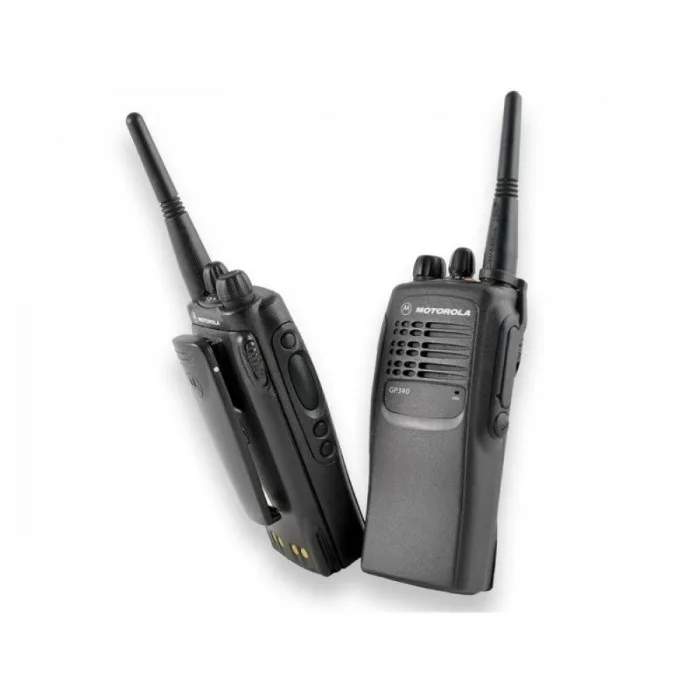
- Motorola GP340 handheld station
- Motorola DM4401 - option for the control room
- Motorola DR3000 - a separate relay unit
These are positions for different roles in the project. Ranges, modes and composition of the compatible kit are agreed before ordering.
Request quotation: Request a quote, +7 (3812) 49-00-02Please email us. Specify the city and address of receipt, the required number and configuration; availability, configuration and deadline are agreed in the response.