Motorola GP340: Frequencies, Programming and Batteries
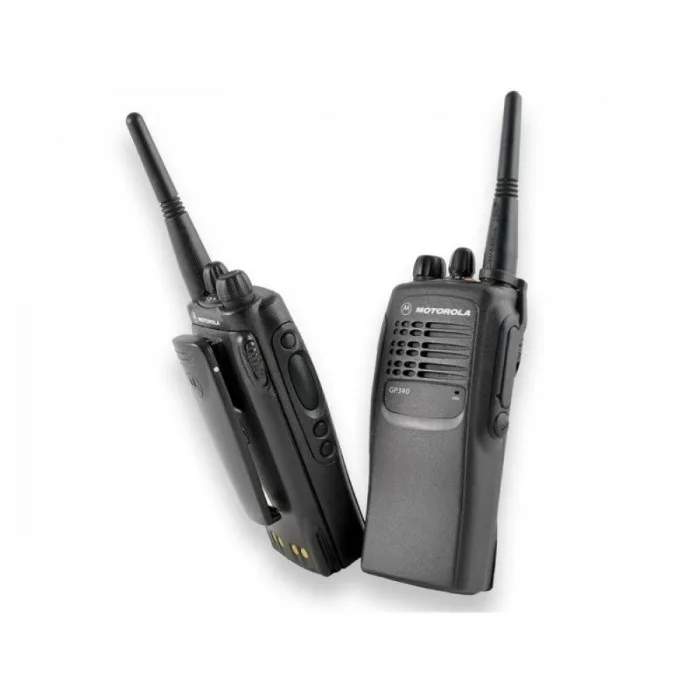
GP340 is a handheld analog two-way radio from Motorola with 16 channels without a display. It has long been withdrawn from production, but parks on it live for years: the stations are bought, the batteries are changed, the channels are rewritten for new frequencies. Here is what owners ask most often.
Frequency: What is your configuration?
The GP340 range is defined by hardware, not software. Motorola released several configurations:
- VHF 136–174 MHz – power of 1–5 W
- UHF 403–470 MHz — 1–4 W;
- 300–350 MHz — 1–4 W;
- Low ranges 29.7–42 and 35–50 MHz.
Reprogramming the configuration does not change: the VHF station will not work on 450 MHz, no matter how much it is redesigned. The model code and range are indicated on the sticker in the battery compartment, indirectly prompts the antenna - VHF it is noticeably longer.
Within the range, each of the 16 channels is individually configured: reception frequency, transmission frequency, grid pitch of 12.5, 20 or 25 kHz, power and tone of noise suppression – CTCSS or DCS. To call individual subscribers, there is a five-ton Select 5 alarm.
What frequencies can be set
For service communication, frequencies are assigned to a specific organization: they receive permission to use radio frequencies, then register the stations themselves. Without permission, only low-power household bands are operating in Russia - LPD 433 MHz (up to 10 mW) and PMR 446 MHz (up to 0.5 W). The GP340, with its 4-5 W, is not designed for them.
Hence the rule of choice: take the configuration, which gets the frequencies from your resolution. If you don’t have permission, start with it, not buy a two-way radio. The exact order of registration check in the radio frequency service of your region.
Who will the GP340 talk to?
With any analog station of the same range, if the frequency, grid pitch and tone match. with digital DMR stations (e.g. DM2600 or DM4401) - only on the channel, which the DMR-station has translated into an analogue. With TETRA, nothing: it's a different system.
Programming: How and Through What
Channels, tones and power are recorded from the computer by the CPS program for the Motorola Professional series (GP320, GP340, GP360, GP380). A separate Tuner program is needed to configure the transmitter and receiver: it is used by services with a measuring device, it is not necessary to change channels.
The computer is connected to the side connector of accessories. U Motorola there's an interface RLN4008 cabled RKN4074 and cable without interface RKN4075. Programs in this series were written for serial port and older versions. WindowsTherefore, a modern laptop needs an adapter. USB–COM version CPSwho understands the firmware of your station.
Before recording, read and save what is currently in the station: if something goes wrong, the original settings can be returned. Tuner settings without the device are better not to touch.
If you do not want to mess with cables - send frequencies and tones from the resolution, record channels before shipment.
Batteries: how to take and how much it works
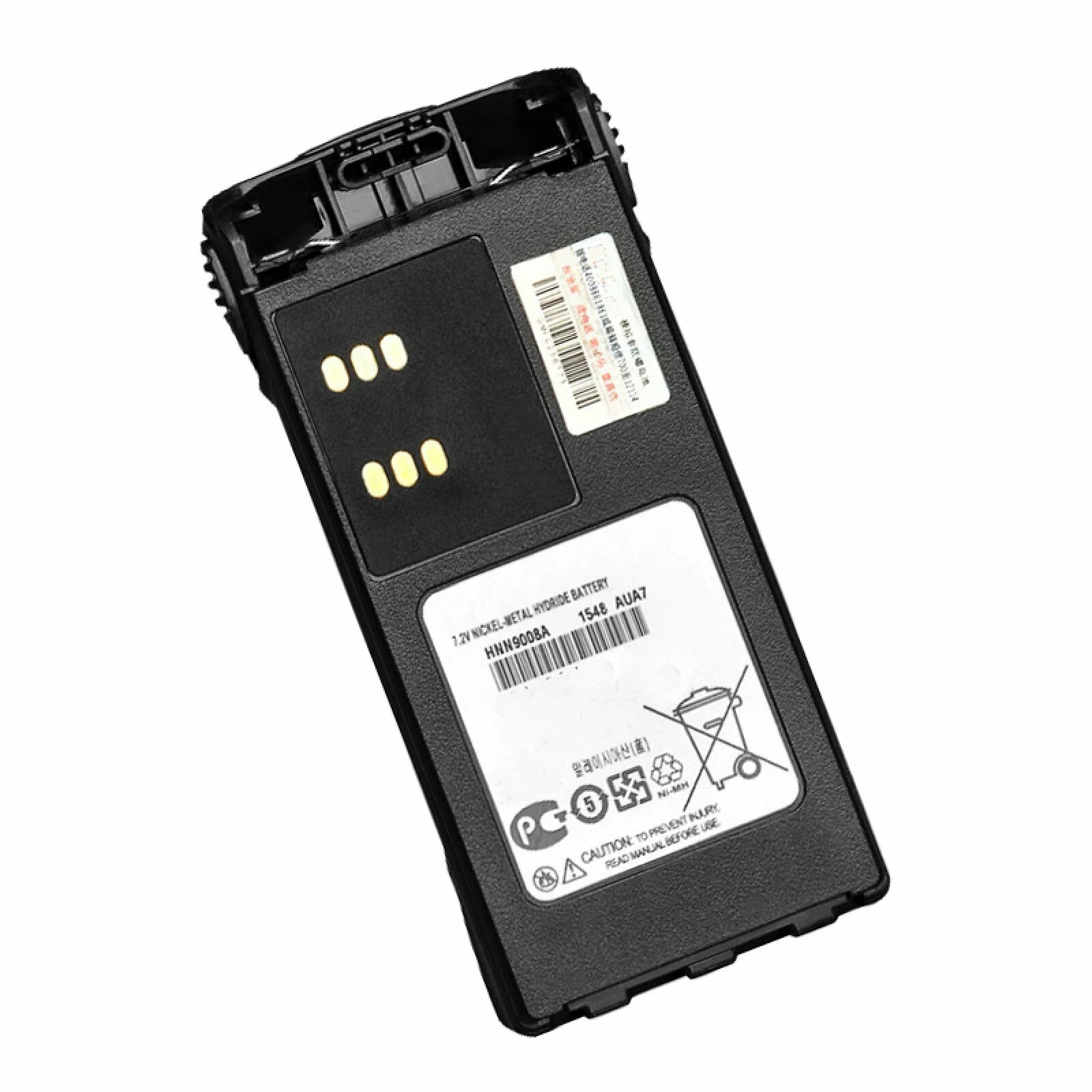
All GP-series batteries are 7.5V with the same fit, they are suitable for the GP320, GP340, GP360, GP380, GP640, GP680 and American HT750, HT1250:
- HNN9008 - Ni-MH standard capacity, included in the kit;
- HNN9009 - Ni-MH of increased capacity;
- HNN9013 – Li-Ion: lighter and thinner, station with it 33 mm in thickness versus 37.5-40 mm with Ni-MH;
- Ni-Cd batteries are old, found in parks, but new ones are almost never taken.
Motorola’s operating time is considered for the cycle “5% transmission, 5% reception, 90% duty”.
- Standard Ni-MH – 8 hours at high power, 11 hours at low power
- Ni-MH of increased capacity - 11 and 14 hours;
- Li-Ion – 8 and 11 hours;
- Ni-Cd is 9 and 12 hours.
For an eight-hour shift, a standard battery is enough, for a twelve-hour one, they take an increased capacity or a second one for replacement. The weight of the station is 350-500 g, depending on the battery.
The station is designed for -20 ... + 55 ° C, but in the cold the battery gives less: in winter the station is worn under a jacket, and the spare battery is kept warm. More information in the technical guide About batteries and charging handheld two-way radio.
Not suitable for the GP340 digital MOTOTRBO batteries: PMNN4412 and PMNN4415AR - they have another landing.
Case, antenna and headset
Case Selected under the battery: under the thick Ni-MH and thin Li-Ion Motorola different models.
The antenna must match the frequency area. Motorola for VHF has shortened antennas for 136-155 MHz (PMAD4012) and 155-174 MHz (PMAD4013); the antenna from the station kit is designed for its configuration.
Accessories are connected to a side multi-pin connector. He fits in. Microphone MDPMMN4027 protected IP57. Headsets with a two-pin connector from CP040 and DP1400 to GP340 They don't.
Instructions and specifications
The user manual and specification open directly in the browser: Motorola GP340 Management (2.2 MB) and specification (332 KB).
Key questions answered
Can a VHF station be switched to UHF?
Nope. The range is set by hardware, you need a station of another configuration.
How many channels does the GP340 have?
16, switch with a handle on top. There is no display and keyboard - the station is given to an employee without training.
Is it waterproof?
The case on IP54 and MIL-STD 810: rain and dust transfers, immersion – no.
What to replace if you need a number?
Motorola is replacing the DP1400 and DP2400. If the park is large, they are gradually switched: digital stations can work on analog channels together with GP340.