After replacing the antenna, the two-way radio works worse: what to compare before buying
After the antenna was replaced, it became more difficult to accept the call or the communication disappeared where it used to work. The cause cannot be determined by this observation alone. First, it is useful to separate the choice of antenna from the test conditions, station status and power supply, and then make the purchase of the appropriate position.
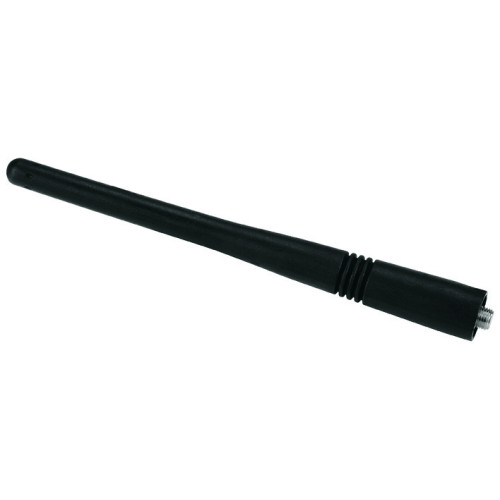
Start with what has really changed.
Write down the old and new antenna code, the two-way radio model, and when the problem occurs. If the battery, workstation, settings or other station in a pair were changed at the same time, this is also important. Such a short story helps to choose the next step: clarify the belonging, repeat the comparison under the same conditions or transfer the device for maintenance.
It’s helpful to describe the outcome in a specific way: it’s harder to hear, worse to hear, or worse for both sides of the conversation. Specify the channel and the places where it was observed. The phrase “distance has become shorter” without conditions leaves too many possible differences between the two checks.
Check the frequency area and the full code
The Vertex ATV-16A and ATV-16C antennas show why similar appearance is not enough. Official manuals for the ATV-16A list 136-150 MHz and for the ATV-16C 162-174 MHz. Verify this data against operating frequencies and your station’s appropriate VHF configuration, not just the series name.
The VX-450 and EVX-530 manuals include the VX-451, VX-454, VX-459 and EVX-531, EVX-534, and EVX-539. The list of accessories of these families helps in the selection of the appropriate configuration, but does not confirm any antenna for each version of the device. The ATU-16K has a section of 300-340 MHz listed in our catalogue; compliance with a specific set is specified separately.
Comparison that gives a useful result
| What to keep the same | What to write in comparison |
|---|---|
| A pair of stations and a work channel | Models, frequency used and who accepts the call |
| Locations and position of operators | Where they stood, how they held or wore the machine |
| Power supply of the inspected station | What battery was used and whether it changed |
| Agreed serviceable antennas | Full codes of the former and new positions |
| Order of multiple repetitions | Whether observation is maintained when returning to baseline conditions |
Select a regular workpoint for comparison and fix the changes one by one. When the antenna, battery and operator seat are replaced simultaneously, the result is that one factor is not singled out. The agreed comparison is not a range measurement or a fault conclusion, but makes the reference to the supplier or service more substantive.
Check the available connection
Turn off the machine and follow its guidance. Inspect the antenna and the available installation site: whether there is visible damage, distortion or contamination. If you doubt the attachment, do not try to achieve the result by force. Damage to the connection and choosing the wrong range require different actions, so they cannot be combined into one cause.
In the VX-450 manual, the manufacturer requires an antenna installed before work. Don't do a trial without it. If the antenna or mount is damaged, further actions should be coordinated with the service organization. Replacing the attachment does not in itself prove the restoration of all hull and station characteristics.
When to discuss the purchase and when the service
If another code or inappropriate portion is found, a replacement request can be prepared by model and frequency. If the desired code matches, but there is mechanical damage, report it separately and attach photos. When the problem persists with the agreed serviceable accessory under repeatable conditions, the purchase of another similar antenna does not provide a confirmed solution.
Don’t choose a new position on the promise of longer length or “enhanced range.” For the purchase in question, a confirmed configuration and compliance with the work kit are required. We do not promise communication kilometers or elimination of any failure by one antenna name; the operating conditions of the equipment and the result of the comparison matter.
What to send for selection
Model and configuration of the station; operating frequencies; old and new antenna code; photo markings and visible damage; description of the change; the result of comparison under the same conditions. To purchase, add the number and city of receipt.
This application allows you to agree on a subject replacement ATV-16A, ATV-16C or check the need for catalog ATU-16K. Below are links to the products themselves. The composition, configuration, current availability and cost are confirmed on a specific request, and the results of the maintenance of the device are discussed separately.
Receipt and delivery
To request delivery, specify the city and address of receipt: Krasnoyarsk, Chelyabinsk, Nizhny Novgorod, Almaty or another point of Russia and Kazakhstan. The amount for each configuration, availability, cost and term are agreed in the quotation.
Questions before buying
Deterioration of communication after replacement proves a malfunction of the new antenna?
Nope. You need to check the code and range, comparison conditions, station, installation and power supply. Observation alone is not enough to conclude the cause.
How to compare the old and new antennas?
Use agreed serviceable supplies and keep the same stations, channel, power supply and operator seats. Change one factor and record the result.
What is required to order the correct replacement?
Full model and configuration two-way radio, operating frequencies, antenna codes and photo markings. Number and city are added to the purchase request.
Materials for the selection of the work kit
- ATV-16A or ATV-16C: Vertex antennas by frequency and two-way radio model
- ATU-16K: 300-340 MHz antenna and pre-order configuration check
- Vertex Spare Antennas for Two-way Radio: Codes, Distribution and Purchase
Manufacturer documentation: ATV-16A, Motorola Solutions; VX-450 management (printed page 41, PDF 42); EVX-530 management (print page 47, PDF 48). These documents confirm ATV-16A and ATV-16C for the specified VHF-configuration. The indication ATU-16K 300-340 MHz refers to our catalog position; the exact compatibility of this variant is agreed on by its passport and marking.
Go to the product and request selection
Choose the main position for your task. Neighboring antennas are presented for comparison; a suitable configuration is selected based on a specific two-way radio model and its operating frequencies.
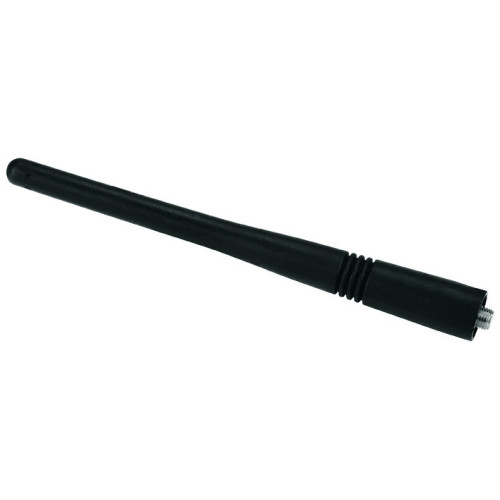
ATV-16A antenna, 136-150 MHz
Catalogue illustration of the Vertex antenna family. The specific ATV-16A marking in this image is indistinguishable; configuration is separately confirmed.
Antenna ATV-16C, 162–174 MHz
Catalogue illustration of the Vertex antenna family. This general appearance does not confirm the ATV-16C marking; we check the full code to order.
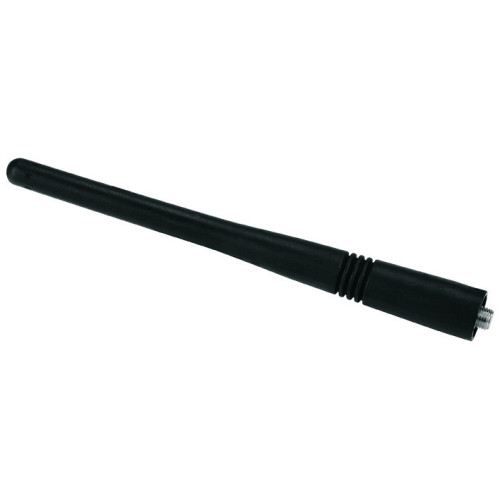
ATU-16K: configuration 300-340 MHz from the catalog
Catalogue illustration of the antenna family Vertexwithout legible markings ATU-16K. The range and compliance of your station are confirmed by the proposed configuration.
Request a quote · Call. Attach the station model, operating frequencies, full antenna marking, number and city of receipt.